Swapping Meat for Plant Staples
Discover practical, budget-friendly whole-food plant substitutions and learn how to avoid alternatives with high water footprints.
Walking through the supermarket, you might assume that eating less meat requires buying expensive, highly processed alternatives that taste nothing like your favourite meals. When we rely on these heavily marketed products, a simple dietary shift can feel costly and complicated.
In reality, the most effective dietary shifts rely on inexpensive staples that have been feeding global populations for centuries.
What are the easiest and most sustainable foods to replace meat with on your meat-free days?
Adapting familiar meals
The biggest hurdle to a new dietary habit is the mental effort of learning an entirely new cuisine.
Instead of overhauling your cookbook, adapting familiar recipes lowers friction and increases the chances that a meat-free day becomes permanent. If your household loves spaghetti bolognese, swapping ground beef for brown lentils maintains the texture and flavour profile while drastically reducing the land required to produce the meal.
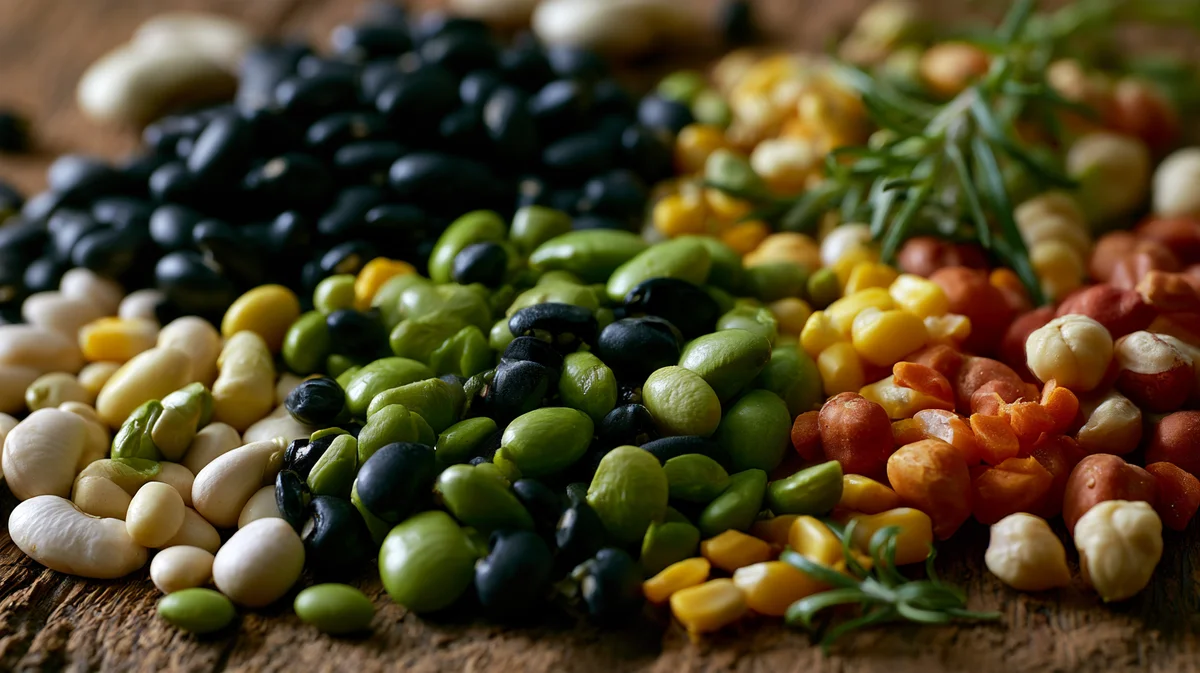
This approach also directly benefits your wallet. Refrigerated animal proteins are typically the most expensive items in a standard grocery basket. In contrast, whole-food substitutions like dry beans, chickpeas, and oats are remarkably cheap and highly shelf-stable, meaning they will sit safely in your pantry for months without spoiling.
By relying on these foundational ingredients rather than engineered meat replacements, families frequently find that reducing their meat intake actively lowers their monthly food budget while maintaining high nutritional value.
Not all plant-based food is perfect
While plant-based foods generally require far less land and emit fewer greenhouse gases than meat, it is a mistake to assume all plants have a zero-impact footprint.
Certain popular meat and dairy alternatives drive severe localized water stress when grown in arid environments (Water Footprint Network, 2023). For instance, almond orchards and avocado plantations are incredibly thirsty crops often cultivated in drought-prone regions, requiring massive amounts of fresh water to sustain their yields year-round.
If you swap local poultry for heavily irrigated avocados or almond milk, you might be trading a land-use problem for a water-scarcity problem.
The strongest environmental swaps rely on robust, low-water crops like oats, soy, or legumes, which have much lower water footprints than tree nuts.
Making the routine frictionless
A major reason people abandon meat-free days is the mid-week time crunch.
When you are tired after work, cooking dry beans from scratch is an unrealistic expectation. This is where batch cooking becomes essential for long-term success. Preparing a large volume of versatile plant proteins over the weekend, like roasting a tray of chickpeas or boiling a pot of quinoa, ensures you have ready-to-eat ingredients waiting in the fridge.
These pre-cooked staples can be thrown into salads, wraps, or stir-fries in minutes. By moving the preparation to a low-stress time of the week, you make the sustainable choice just as fast as ordering takeout.
What to take away
Transitioning away from meat is much easier when you lean on simple, affordable staples rather than complicated new diets.
- Rely on cheap, shelf-stable legumes and grains rather than expensive processed alternatives.
- Avoid swapping meat for high-water crops like almonds if they are grown in drought-prone areas.
- Batch cook your plant proteins on the weekend to make weekday meals effortless.
Next, we will explore how to lock this new dietary habit into your weekly schedule.
References
- Water Footprint Network. (2023). Water footprint of crop and animal products. Source