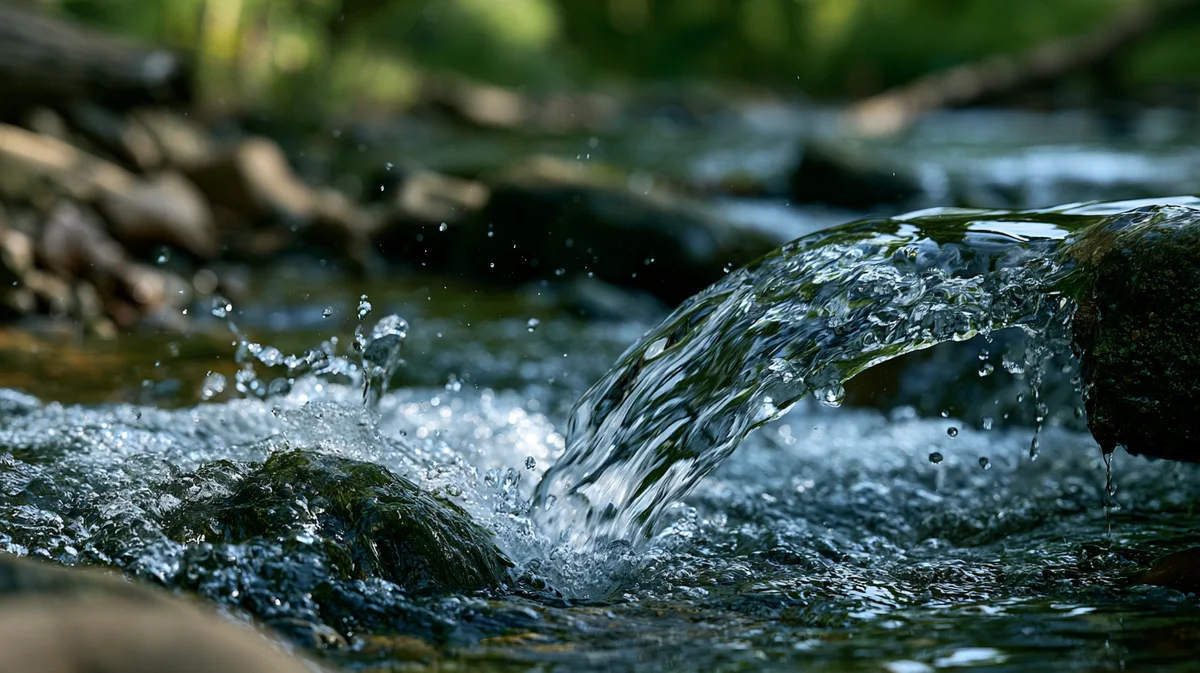
How Climate Disrupts the Water Cycle
Understand how a warmer atmosphere intensifies both extreme droughts and destructive floods, breaking the predictability of historical weather.
You might have noticed a strange and contradictory pattern in recent weather headlines. Regions that have endured multi-year, severe droughts are suddenly hit by catastrophic, city-destroying floods.
We intuitively think of climate change as just things getting hotter and drier. But a hotter atmosphere behaves more like an erratic sponge, holding onto water far longer, only to wring it all out at once.
How exactly does global warming lead to severe water shortages while simultaneously causing extreme floods?
The mechanics of a warmer atmosphere
The core mechanism driving this chaos is simple thermodynamics. For every 1 degree Celsius (1.8 degrees Fahrenheit) the atmosphere warms, it can hold approximately seven percent more moisture.
This increased capacity creates intense atmospheric thirst (IPCC, 2021). A hotter sky rapidly evaporates moisture from soil, lakes, and vegetation. It holds onto this water, turning previously moderate dry seasons into deep, prolonged droughts. It is as if the clouds are hoarding the water that would have normally fallen as gentle, regular rain.
This prolonged evaporation breaks the historical water cycles that our agricultural systems were built around. Farmers who relied on steady spring showers now face deeply parched soil by early summer.
Why deeper droughts lead to worse floods
Because the atmosphere is holding so much more moisture, when conditions finally shift and the rain does fall, it falls in intense, concentrated bursts. But the ground is no longer ready to absorb it.
During a prolonged drought, soil becomes baked, compacted, and heavily crusted. When an intense deluge hits this hardened earth, the water cannot sink in. Instead, it becomes rapid surface runoff, sweeping away topsoil and overwhelming municipal storm drains (WMO, 2022).
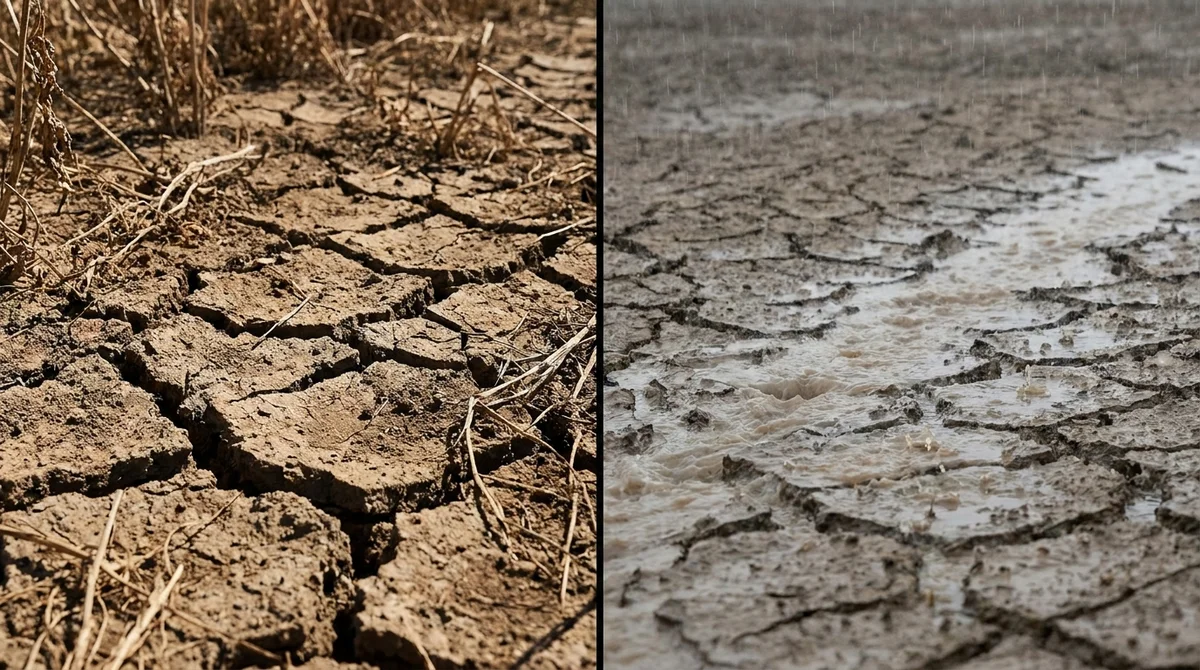
This is why drought and flooding are not opposites; under climate change, they are two sides of the exact same mechanism. The sponge holds more, dries out the ground below it, and then drops an ocean of water onto concrete-like soil that cannot absorb it.
Losing our natural water towers
This disruption extends to our mountain ranges, which traditionally act as large, frozen water towers for the regions below.
Historically, winter precipitation fell as snow, building up a deep snowpack. When spring arrived, this snow would melt slowly, providing a steady, reliable drip of surface water into rivers and reservoirs throughout the hot summer months.
Fact: Timing is everything. If precipitation shifts from slow-melting winter snow to violent winter rain, reservoirs overflow in winter and run completely dry by mid-summer.
With atmospheric warming, winter precipitation increasingly falls as rain rather than snow. The water rushes through the river systems in January and February, forcing reservoir managers to release it into the ocean to prevent dam failures (Barnett et al., 2005). By July, when farmers urgently need that water, the mountains are bare, and the rivers are dry.
What to take away
Climate change does not just reduce total water; it fundamentally breaks the timing and delivery mechanisms we rely on.
- A warmer atmosphere holds more moisture, increasing atmospheric thirst and drying out soils.
- Baked, crusted earth cannot absorb water, causing heavy rains to become destructive surface runoff instead of replenishing groundwater.
- Warming temperatures turn slow-melting mountain snowpack into immediate winter rain, leaving summer reservoirs empty.
- Drought and flooding are driven by the exact same thermodynamic mechanism, acting as a threat multiplier for aging infrastructure.
- Check whether your regional water authority publishes seasonal snowpack or reservoir-timing data, since a shift from spring snowmelt to winter rain is an early warning sign for summer shortages.
When these historical surface water cycles break down, communities are forced to look underground for survival.
References
- Intergovernmental Panel on Climate Change. (2021). Climate Change 2021: The Physical Science Basis. Contribution of Working Group I to the Sixth Assessment Report. Source
- World Meteorological Organization. (2022). State of Global Water Resources 2022. Source
- Barnett, T.P., Adam, J.C., Lettenmaier, D.P. (2005). Potential impacts of a warming climate on water availability in snow-dominated regions. Nature. Source