The Interconnected Water, Energy, and Food Nexus
Analyze how water shortages trigger cascading failures across the electrical grid and global food supply chains.
When a severe heatwave hits, you expect to see yellowing lawns and lower reservoir levels. You do not necessarily expect the lights to go out in your home. But during severe dry spells, energy grid blackouts often follow right on the heels of municipal water restrictions.
Food prices at the supermarket suddenly spike a few weeks later. These systems seem entirely distinct, handled by different utility companies and different government departments. Yet a strain in one immediately fractures the others. How does a water shortage affect the electrical grid and food supply?
Defining the three pillars
Modern civilization operates on three deeply codependent pillars. You cannot extract and treat water without power, and you cannot grow food without both. Power generation is nearly as water-dependent: almost every conventional power plant needs water to run, from thermal cooling systems to hydropower turbines, though wind and solar photovoltaic panels need comparatively little (IEA, 2016).
This three-way dependency is known as the Water-Energy-Food Nexus, a framework showing that stress in any single sector inevitably ripples into the other two (FAO, 2014). Policymakers used to manage these resources in complete isolation, but climate volatility has made their interconnected nature impossible to ignore.
A shock to the water cycle is almost never just a water problem. It immediately strains the energy system, which rapidly transforms into a food security problem.
Cooling the electrical grid
Power plants are fundamentally just giant engines that generate tremendous amounts of heat. Whether a facility burns coal, splits atoms in a nuclear reactor, or harnesses natural gas, it requires constant cooling to prevent serious equipment failure.
To keep the internal turbines running safely, thermal power plants withdraw large volumes of water from nearby rivers, lakes, or oceans (IEA, 2016). They run this water through the facility to absorb heat and then discharge it or evaporate it into the atmosphere. If river levels drop too low during a drought, or if the water becomes too warm to effectively cool the machinery, the plant must power down.
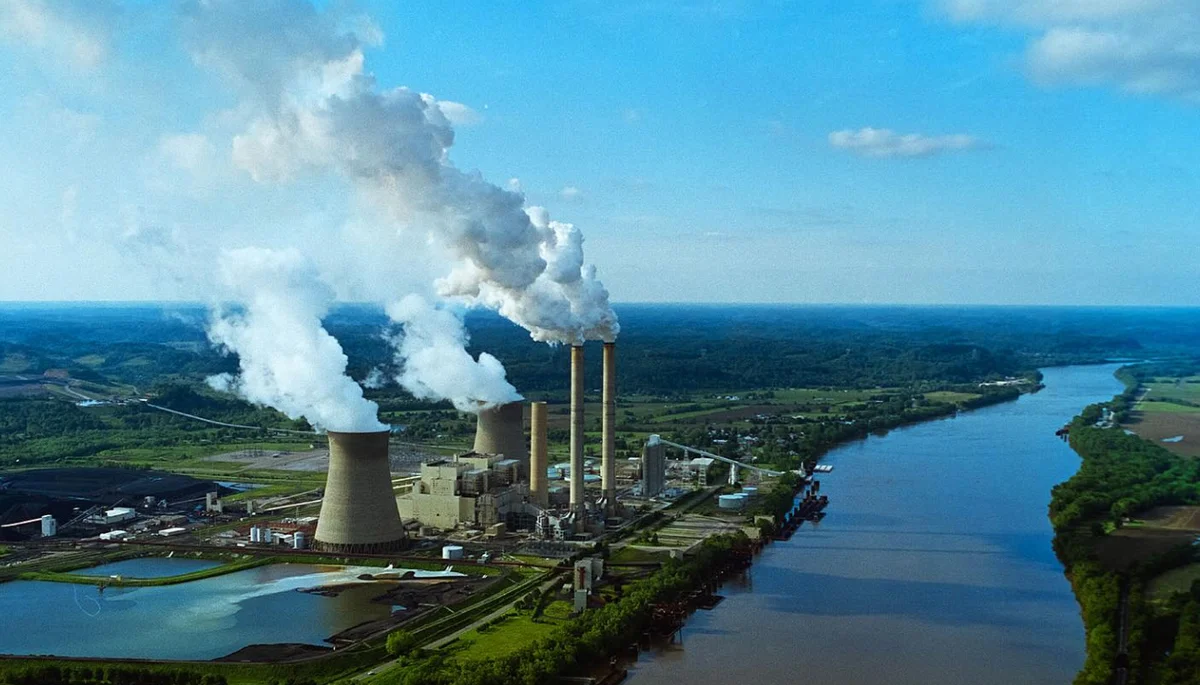
This is why droughts frequently trigger rolling blackouts. The grid loses its baseload power generation at the exact moment households are running their air conditioning the most.
Modern digital infrastructure adds another intense layer of demand. Data centers running cloud computing often rely on evaporative cooling towers to keep server racks from overheating, though a growing share use air-cooling or closed-loop systems that need far less water. A single artificial intelligence query typically demands more processing power, and therefore more cooling water, than a simple web search, though the exact multiple is still debated and shifts quickly as hardware and cooling methods improve.
The energy required to move water
The dependency flows heavily in the other direction as well, because water itself is incredibly dense and heavy to move. Pulling water out of the natural environment and making it safe for human use is an intensive industrial process.
Pumping water out of deep aquifers and pushing it through hundreds of kilometers of pipes takes staggering amounts of electricity. Because of this, treating and distributing municipal water is often one of the largest recurring electricity expenses for a local government, with energy typically accounting for a quarter to two-fifths of a utility's operating budget (EPRI, 2013).
When surface water dries up during a drought, cities and farmers inevitably turn to underground aquifers. But as the water table drops from rapid over-extraction, municipal pumps have to reach much deeper into the earth.
Lifting heavier columns of water from deeper underground requires exponentially more electricity. This large spike in groundwater pumping demand hits the electrical grid at the exact moment thermal power plants are struggling with their own water shortages.
If the electrical grid fails, the pumps shut off. Within hours, elevated reservoirs run dry and municipal water pressure drops to zero, creating a harmful feedback loop where a lack of water causes a lack of power, which in turn halts the remaining water supply.
Cascading failures in agriculture
Agriculture sits at the heavy end of both systems, accounting for roughly 70 percent of global freshwater withdrawals. It is heavily reliant on both water for direct irrigation and energy for operating heavy machinery.
The modern food system also relies on energy-intensive fertilizers, which require vast amounts of natural gas to manufacture. When a regional water shortage triggers widespread grid failures, pumps shut down and irrigation stops, directly causing field-level crop failures.
This creates a cascading system failure. A dry winter leads to low rivers, which throttles power generation, which shuts down irrigation pumps, which destroys the harvest, which ultimately drives up global food prices. You simply cannot fix the food supply without stabilizing the water and power networks first.
What to take away
The systems keeping modern life running are entirely tangled together.
- The Water-Energy-Food Nexus guarantees that a shock in one sector disrupts the other two.
- Thermal power plants and data centers rely heavily on continuous water flows to prevent critical overheating.
- Water treatment and distribution consume a large share of a municipality's overall electrical budget.
- Check whether your local water or power utility publishes energy or water costs as a share of its budget — a rising share often signals deeper groundwater pumping or drought stress.
As you move into the next module, you will evaluate whether large-scale technological interventions like ocean desalination can actually solve this complex web of problems.
References
- Food and Agriculture Organization of the United Nations. (2014). The Water-Energy-Food Nexus: A new approach in support of food security and sustainable agriculture. FAO. Source
- International Energy Agency. (2016). Water Energy Nexus: Excerpt from the World Energy Outlook. IEA. Source
- Electric Power Research Institute (EPRI). (2013). Electricity Use and Management in the Municipal Water Supply and Wastewater Industries. Source