The physical mechanics of nodule removal
Discover how heavy underwater machinery compacts the seabed and permanently removes vital deep-sea habitats.
Imagine dropping a vehicle the weight of a commercial bulldozer miles into the pitch-black ocean. The goal is to scrape potato-sized rocks off a surface that feels more like soft butter than solid ground.
The abyssal plain, where polymetallic nodules sit, is incredibly delicate. There is no fast-moving current to wash away tracks, and the creatures that live there grow at slow speeds. Because this environment is so foreign to terrestrial landscapes, the industry often compares nodule collection to simply vacuuming the seafloor or picking apples in an orchard.
In reality, industrial extraction relies on heavy, remote-controlled machinery that fundamentally changes the topography it touches.
How do extraction companies actually get the rocks off the bottom of the ocean, and what does it do to the seafloor?
Scraping the abyssal plain
The machinery designed to harvest deep-sea minerals operates on an unprecedented scale.
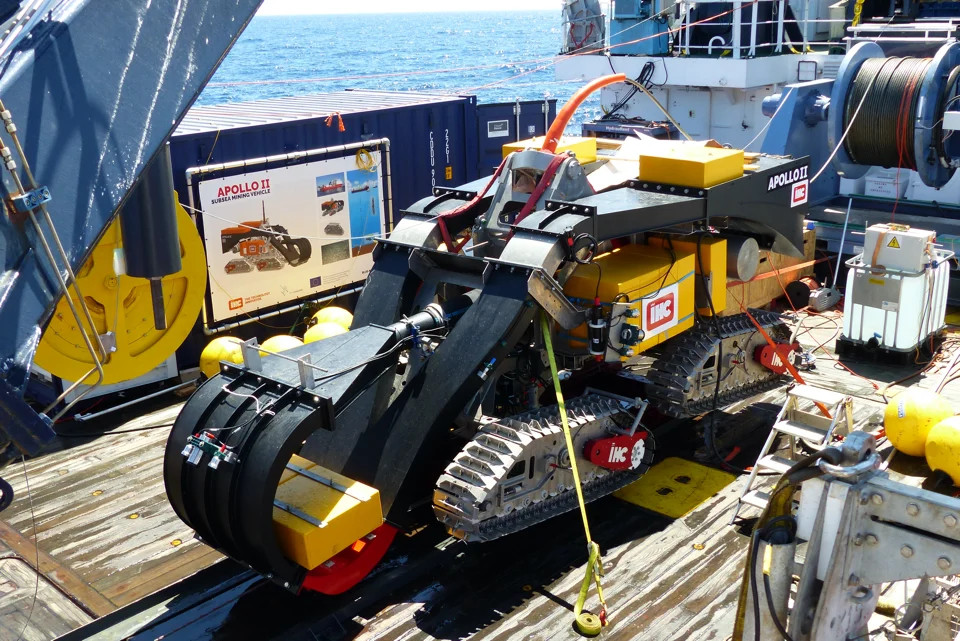
To bring polymetallic nodules to the surface, companies deploy massive heavy underwater crawlers connected to surface ships by miles of piping. These remote-controlled vehicles drive across the soft sediment, scraping up the top layer of the seafloor to collect the mineral-rich rocks.
Fact: Industrial extraction requires heavy underwater crawlers that strip the top layer of the seabed and severely compress the ground underneath.
Once the crawler scoops up the nodules, a powerful suction system pumps the rock-and-mud slurry up to the support vessel (NOAA, 2023). The sheer weight of these machines ensures they sink deeply into the muck as they travel. This is not a gentle skimming process; it requires aggressive physical contact with the seabed to dislodge materials that have sat in place for thousands of millennia.
The permanent loss of unique habitats
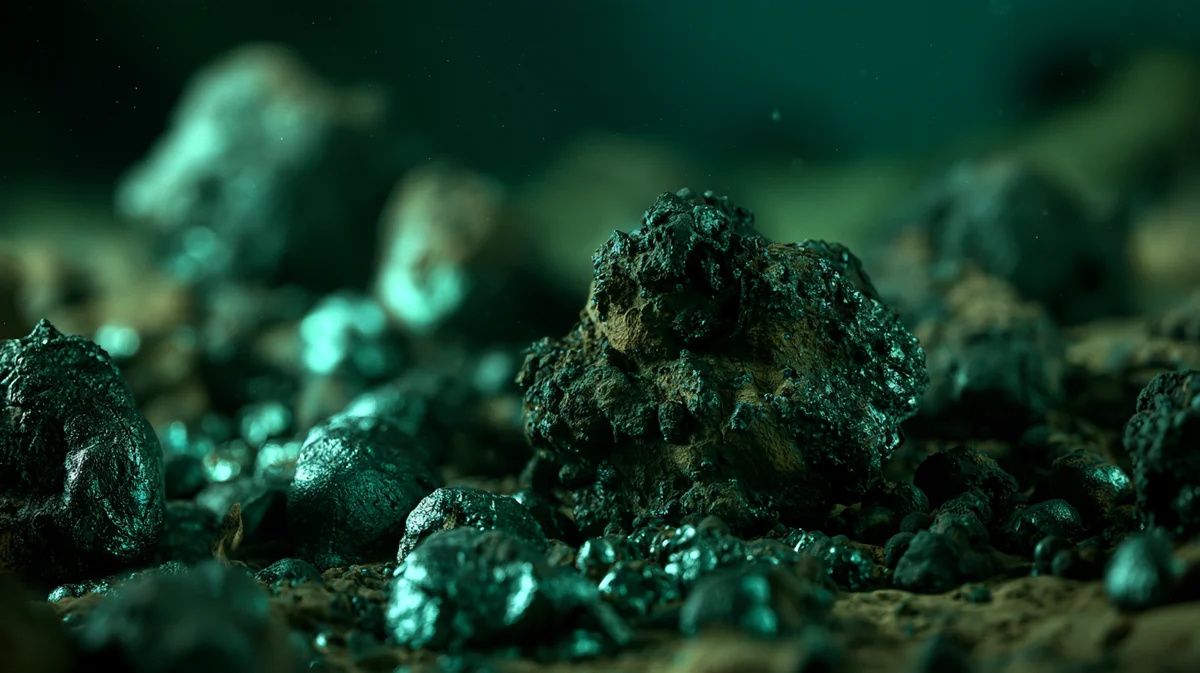
The most immediate physical impact of this machinery is the removal of the nodules themselves.
In the deep ocean, the muddy bottom offers very few solid surfaces for life to anchor onto. For many species of deep-sea sponges, anemones, and corals, these metal-rich rocks act as the rare hard substrate required for survival in an endless expanse of mud (Deep Sea Conservation Coalition, 2022).
When the crawler sucks a nodule to the surface, it permanently deletes the exact habitat that took millions of years to form. Because these polymetallic rocks grow at a rate of just a few millimeters per million years, removing them creates a void that cannot regenerate on any human timescale. The creatures that evolved specifically to attach to these surfaces lose their home entirely.
How vehicle tracks prevent future recovery
Even if extraction vehicles could selectively lift the rocks without scraping the bottom, their sheer weight would still cause severe damage.
The abyssal plain is composed of extremely fine, soft mud. When heavy machinery drives across this environment, it causes intense sediment compaction, crushing the soft seabed into dense, impenetrable ruts (Jones et al., 2017).
In terrestrial forests, rain and wind eventually smooth over tire tracks. But in the deep sea, the water is virtually still. Studies of historical test-mining sites reveal that crawler tracks remain starkly visible decades later, with nearly zero biological recovery inside the ruts. The compacted mud becomes too hard for burrowing worms and microorganisms to penetrate, effectively sterilizing the pathway for centuries.
What to take away
The physical mechanics of extraction make deep-sea mining highly invasive.
- Heavy underwater crawlers aggressively scrape the seabed to pump minerals to surface vessels.
- Polymetallic nodules act as the rare hard substrate deep-sea corals need to survive.
- Removing these rocks permanently deletes slow-growing habitats that will not regenerate.
- The massive weight of extraction vehicles causes severe sediment compaction, leaving hard ruts that block biological recovery.
This physical disruption is only the first layer of impact, setting off much wider disturbances in the water column above.
References
- National Oceanic and Atmospheric Administration. (2023). Ocean Exploration: Deep-Sea Mining. Source
- Deep Sea Conservation Coalition. (2022). The Science of Deep-Sea Mining. Source
- Jones, D. O. B., et al., 2017. Biological responses to disturbance from simulated deep-sea polymetallic nodule mining. Source