How sediment plumes choke marine life
Understand how deep-water dust storms spread destruction far beyond the immediate mining footprint.
The destruction caused by mining the seabed does not stop at the exact path of the crawler tracks. Whenever heavy machinery operates on a dry dirt road, it kicks up a cloud of dust that drifts far beyond the vehicle. The deep ocean behaves similarly, but the physics of water carry the consequences much further.
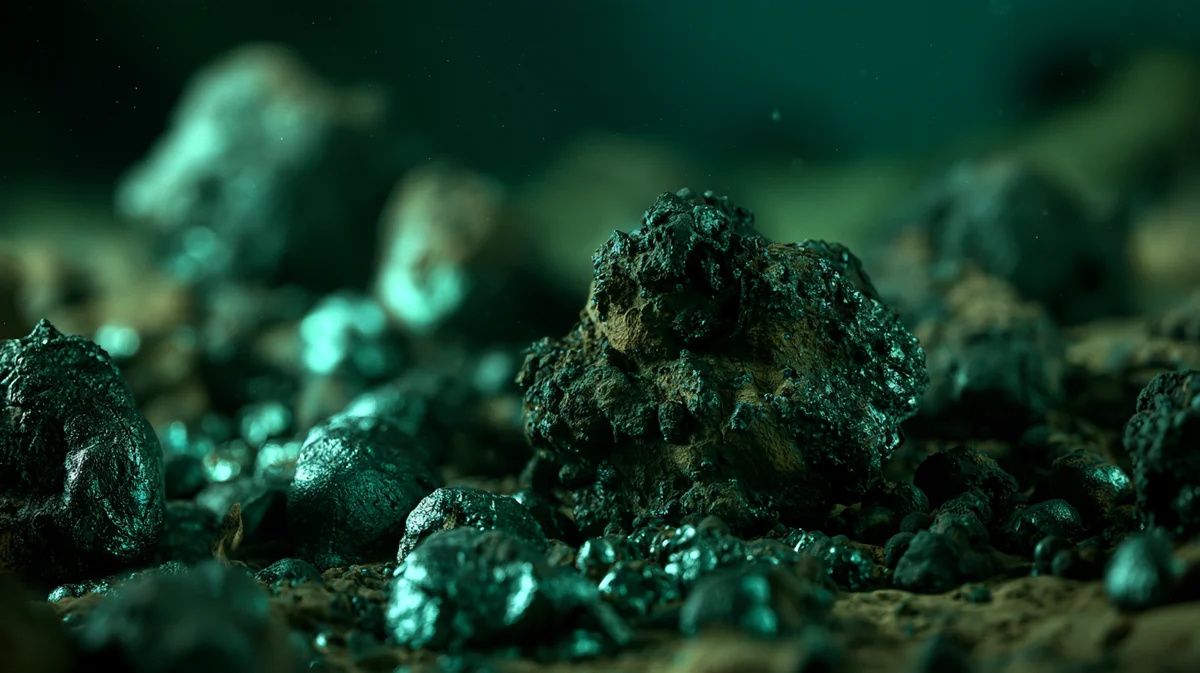
Extracting minerals in complete darkness, miles below the surface, involves disturbing incredibly fine mud that has been settling undisturbed for thousands of years. As the crawler moves and pumps materials up to the surface ship, it releases vast amounts of this suspended muck back into the water column, creating an artificial weather system of debris.
Does the damage from deep sea mining stay in one spot, or does it spread through the ocean?
The creation of massive underwater dust storms
Ocean mining creates disturbance well beyond the immediate footprint of the machines.
As heavy machinery scrapes the floor, it kicks up enormous clouds of fine mud known as sediment plumes, which drift through the water column (Spearman et al., 2020). These plumes originate from two main sources: the physical movement of the crawler tracks crushing the seabed, and the discharge pipes that dump excess mud back into the ocean after the surface ship separates the nodules.
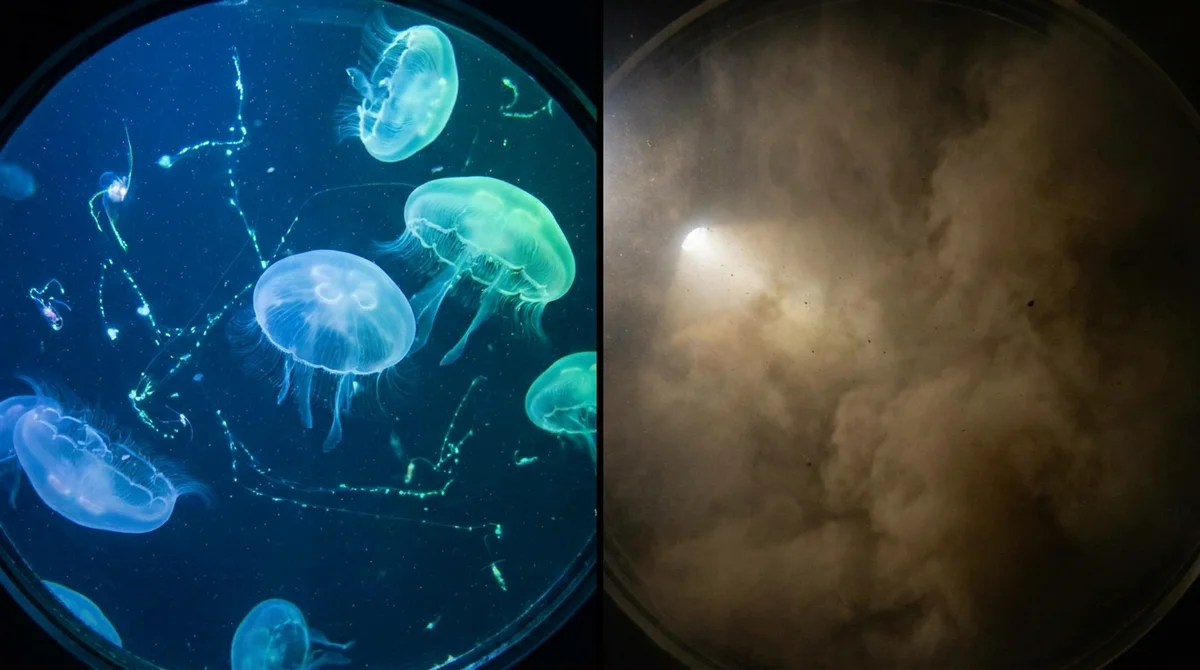
Because the particles making up the abyssal plain are incredibly fine, they do not settle quickly. Instead, they linger in the water, creating thick fogs of debris in an environment that is normally crystal clear.
Where industry assessments fall short
Corporate proposals often downplay the severity of these sprawling underwater dust storms.
Many industry-funded life-cycle assessments claim that ocean mining carries a "zero human cost" because it avoids displacing terrestrial communities. However, independent reviews highlight that these models frequently omit severe biodiversity impacts. Reports by the Intergovernmental Science-Policy Platform on Biodiversity and Ecosystem Services (IPBES) note that the evidence regarding plume damage is robust, and the resulting harm to deep-water ecosystems is heavily contested by independent marine scientists (Levin et al., 2020).
The evidence on this is mixed in public relations materials, but scientifically clear: while a terrestrial mine has a fixed fence line, an ocean mine generates an uncontainable drift of suspended sediment that crosses vast ecological boundaries (Drazen et al., 2020).
When an environmental audit evaluates a traditional land-based copper mine, the geographical footprint is strictly defined by property lines and local watersheds.
Because deep ocean currents operate across immense international distances without physical barriers, the environmental impact cannot be contained. A single mining operation's discharge can alter the water clarity of regions entirely disconnected from the actual extraction site, making traditional audit boundaries highly ineffective.
How suspended mud travels on deep currents
The deep ocean is not entirely still; it is governed by slow, continuous deep-water currents.
Once the fine mud is suspended in the water column, these currents can carry the particles for hundreds of kilometers before they finally settle. This means a single mining site can cast a shadow of ecological disruption over a massive geographic area (Gollner et al., 2017).
The mud eventually rains back down onto the seafloor far outside the initial mining zone. As it settles, it coats everything in a thick layer of unfamiliar debris, disrupting untouched habitats that were never directly scraped by the crawler vehicles.
Smothering the mid-water ecosystem
The creatures that live in the deep sea are highly adapted to clear, particle-free water.
Many deep-sea animals are filter-feeders, surviving by straining tiny organic particles from the passing currents. When thick clouds of inorganic mud sweep through their habitat, their feeding apparatuses become clogged, effectively choking them (Haddock et al., 2010).
Furthermore, because the abyss receives zero sunlight, many species rely entirely on bioluminescence to hunt, mate, and escape predators. Thick clouds of sediment block these vital light signals, functionally blinding animals that depend on glowing flashes to communicate in the dark.
What this means for the ocean
The damage caused by ocean extraction is not confined to the path of the machinery.
- Crawler movement and return pipes create massive sediment plumes of fine mud.
- Industry life-cycle assessments often ignore these complex biodiversity impacts.
- Deep ocean currents carry suspended particles for hundreds of kilometers, expanding the disruption zone.
- The drifting mud chokes delicate filter-feeders and blocks vital bioluminescent communication.
Recognizing the scale of this physical devastation clarifies why consumer habits and corporate choices regarding battery minerals matter so much.
References
- Spearman, J., et al. (2020). Measurement and modelling of deep sea sediment plumes and their environmental impacts. Marine Pollution Bulletin. Source
- Levin, L. A., Amon, D. J., & Lily, H. (2020). Challenges to the sustainability of deep-seabed mining. Nature Sustainability. Source
- Drazen, J. C., et al., 2020. Midwater ecosystems must be considered when evaluating environmental risks of deep-sea mining. Source
- Gollner, S., et al. (2017). Resilience of benthic deep-sea fauna to mining activities. Marine Environmental Research. Source
- Haddock, S. H. D., et al. (2010). Bioluminescence in the Sea. Annual Review of Marine Science. Source