Why Ocean Nodules Are the Primary Target
Explain the unique concentration and accessibility appeal of polymetallic nodules in the Clarion-Clipperton Zone.
If critical minerals are already mined on land, looking for them thousands of metres underwater seems like an unnecessary, expensive logistical nightmare. The deep ocean is pitch-black, freezing, and under crushing pressure - hardly an ideal environment for heavy industry.
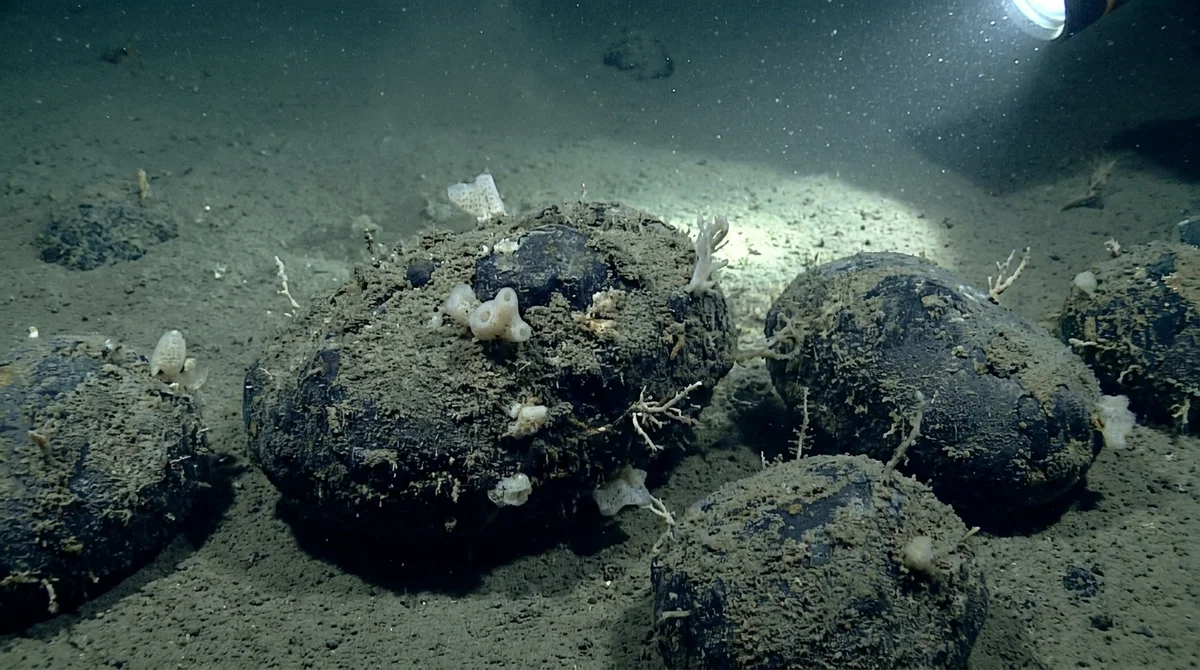
Yet mining consortiums have spent millions developing robotic crawlers and transport ships specifically designed for the abyssal plain. They are not looking to blast traditional mine shafts into the seabed. Instead, they are hunting for something unique to the deep ocean: small, potato-shaped rocks scattered across the mud that contain a nearly perfect blend of the exact metals the battery industry is desperate to secure.
Why do mining companies want to go miles underwater for these metals instead of just digging on land?
The appeal of polymetallic nodules
When survey teams map the seabed, they are hunting for a very specific geological formation.
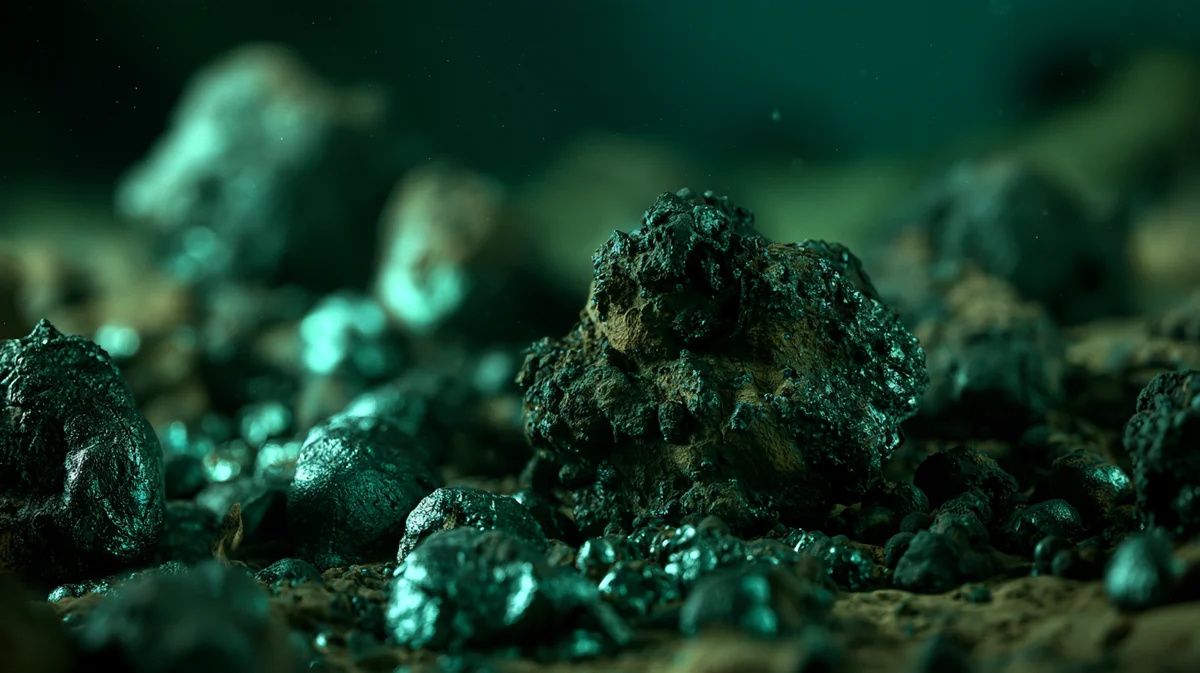
These valuable rocks are known as polymetallic nodules, which take millions of years to grow millimetre by millimetre as metals slowly precipitate out of the surrounding seawater. They often form around a tiny core fragment, like a shark tooth or a piece of shell, eventually growing into dense, dark lumps that rest loosely on the soft seabed.
Their true appeal lies in their chemical composition. Unlike terrestrial ores that usually yield only one primary metal, nodules contain multiple battery metals simultaneously, packing cobalt, nickel, copper, and manganese into a single rock. Because terrestrial ores are suffering from declining ore grade - meaning companies have to crush significantly more rock today to extract the same amount of copper or nickel as they did twenty years ago - the unusually high purity of these ocean nodules represents a massive potential cost saving for extraction companies.
Ground zero: The Clarion-Clipperton Zone
While these rocks exist in several oceans, industry focus is overwhelmingly locked on one specific region.
The Clarion-Clipperton Zone (CCZ) is a massive stretch of international seabed in the Pacific Ocean, located between Hawaii and Mexico. It spans roughly 4.5 million square kilometres (1.7 million square miles) and is estimated to hold more cobalt and nickel than all known land-based reserves combined (World Bank, 2020).
Because the CCZ lies completely outside any single country's Exclusive Economic Zone, no individual nation owns it.
Under global maritime treaties, the international seabed is legally designated as the common heritage of humankind. This principle mandates that any resources pulled from the international seabed are theoretically supposed to benefit the global community as a whole, not just the single corporation or sponsoring state that extracts them.
This noble legal framework has triggered intense bureaucratic battles inside the United Nations over who exactly gets to authorise commercial extraction, how environmental harm is assessed, and how potential profits would actually be distributed globally.
The sheer density of nodules in the CCZ makes it the undisputed focal point for the upcoming mining boom, with numerous international contractors already holding exploration licences for vast tracts of the zone.
The 'picking apples' misconception
Proponents of the industry often compare nodule collection to a gentle harvest.
Extraction companies frequently claim that deep-sea mining is less destructive than terrestrial mining, arguing that scooping rocks off the mud requires no deforestation, no child labour, and no toxic chemical run-off (IPBES, 2019). In public relations campaigns, the process is routinely described as being as harmless as 'picking apples off the ground.'
Myth: Harvesting nodules is completely harmless because the rocks are just resting on empty mud.
Fact: The deep sea is not an empty desert; nodules serve as the only hard substrate for countless species to anchor to, making their removal a permanent loss of habitat.
But the abyssal plain is a highly complex, fragile ecosystem. Because the deep ocean lacks strong currents or sunlight, biological processes happen at a glacial pace. A disruption that might recover in a few years on land could leave a permanent scar in the deep ocean. The 'picking apples' narrative completely ignores the physical reality that removing these nodules permanently strips away the foundation of the local habitat.
What to take away
The push to mine the deep ocean is driven entirely by the unique geology of the seabed.
- Polymetallic nodules are dense rocks that contain a high-purity mix of cobalt, nickel, and copper, making them incredibly valuable.
- Miners want these nodules to secure multiple battery metals at once, bypassing the declining ore grades found in terrestrial land mines.
- The Clarion-Clipperton Zone holds massive reserves of these nodules in international waters, sparking a rush to commercialise the 'common heritage of humankind.'
- Industry claims that nodule collection is harmless ignore the fragile, slow-moving nature of the deep-sea ecosystem.
Next, we will explore exactly how the heavy machinery designed to harvest these nodules physically alters the deep ocean habitat.