Why High Pressure Creates a Heat Lid
Explore the atmospheric mechanism that compresses air and bakes the earth during a heat dome.
A standard summer heatwave might bring a few days of high temperatures before a breeze or rainstorm breaks the cycle. But sometimes, the weather simply stops moving. The sky stays relentlessly clear, the wind dies down, and the heat builds day after day.
People often assume it is just the normal peak of summer, or imagine a literal dome in the sky, but the physics at play are entirely different.
What exactly makes a heat dome hotter than a normal summer heatwave?
The invisible weight of an anticyclone
The engine behind this extreme weather is a dense layer of sinking atmosphere, often called an anticyclone. High pressure pushes large volumes of air downward toward the surface, preventing it from rising.
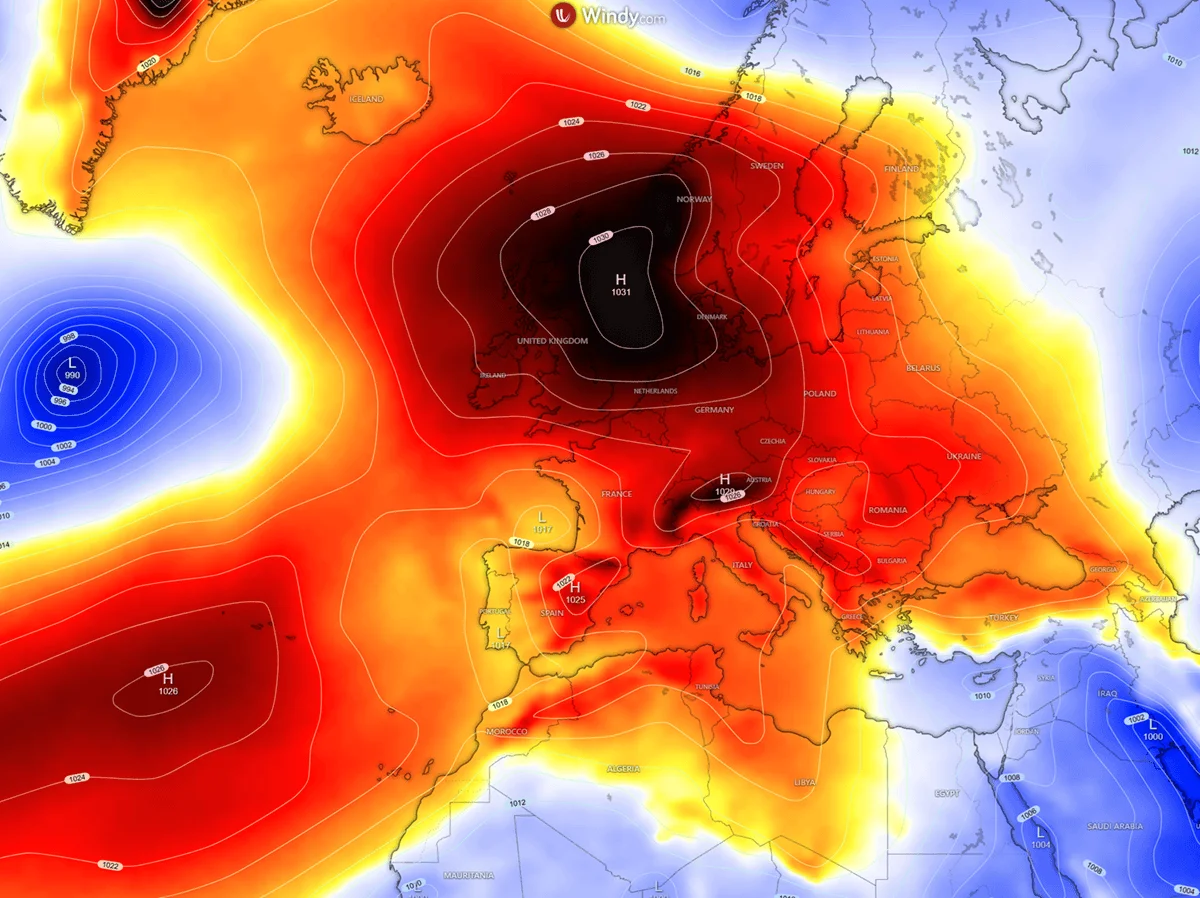
As it gets closer to the ground, this sinking high-pressure system compresses and heats up, much like the air inside a bicycle pump gets warm when you push the handle (NOAA JetStream). Because the air is being forced downward, it physically prevents ground-level moisture from rising into the atmosphere to form clouds.
Fact: There is no physical barrier. A heat dome is just a large, stagnant area of high atmospheric pressure that traps hot air in place like a lid on a pot.
With no cloud cover to reflect the sun, solar radiation beats down continuously. The high pressure creates a stagnant column of air that refuses to budge, locking the sweltering conditions over a specific region for days or even weeks.
The soil moisture feedback loop
As the unshielded sun beats down day after day, it slowly bakes the moisture out of the earth. Under normal summer conditions, evaporative cooling from damp ground lowers the temperature of the surrounding air.
It takes thermal energy to turn liquid water into vapour, so that energy is absorbed rather than heating the air. But once the ground completely dries out, that natural evaporative cooling effect vanishes.
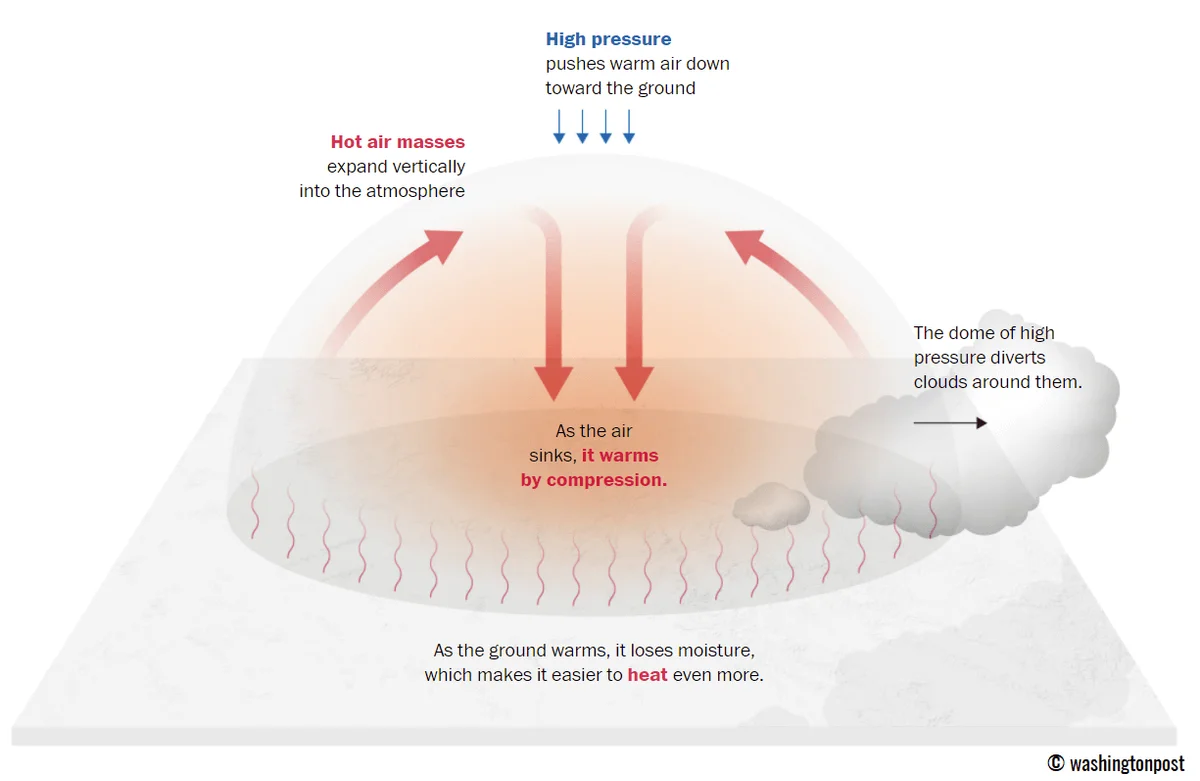
Without moisture to absorb the sun's energy, dry earth radiates heat outward, which rapidly spikes the ambient temperature far above what a normal summer day would produce (IPCC, 2021). The longer the high pressure sits in place, the drier the ground gets, and the hotter the trapped air becomes.
A city planner notices that their local parks usually stay cooler than the surrounding concrete sidewalks during July. However, after two weeks of stagnant, cloudless weather, the parks become just as sweltering as the paved streets. What causes this shift?
The high-pressure system forces the park's moisture to form a physical dome overhead.
The soil has dried out, completely removing the natural evaporative cooling effect.
The vegetation begins to absorb thermal energy instead of turning liquid water into vapour.
Correct
Under normal conditions, damp soil uses the sun's energy to evaporate water, which cools the air. During a prolonged heat dome, this moisture completely bakes away. Without water to evaporate, the dry ground radiates heat outward, causing a massive spike in ambient temperatures.
The air conditioning paradox
When outdoor temperatures climb to dangerous extremes, the most immediate survival strategy is to seek out artificial cooling. Air conditioning is a powerful tool that actively prevents heatstroke and saves lives during these intense weather events.
However, relying on fossil-fuelled cooling accelerates future heat domes, creating a deeply problematic cycle (IEA, 2018). The electrical energy required to run millions of residential and commercial air conditioning units at maximum capacity puts heavy strain on regional power grids.
When temperatures become dangerous, millions of people run their air conditioners at maximum capacity. This massive demand
pushes cool air upward into the stagnant atmosphere, compressing the high-pressure system,
relies heavily on burning fossil fuels, releasing huge volumes of greenhouse gases,
artificially lowers the outdoor ambient temperature, interrupting the soil moisture feedback loop,
which drives the warming patterns that guarantee more extreme high-pressure anomalies in the future.
Correct
The paradox of air conditioning is that the immediate solution to extreme heat actively contributes to the problem. Running millions of AC units puts a heavy strain on power grids. Because these grids mostly burn fossil fuels, surviving today's heatwave guarantees more greenhouse gas emissions.
Because the majority of global grids still rely on burning fossil fuels, surviving today's heat wave requires emitting large volumes of greenhouse gases. Those emissions directly contribute to the warming patterns that guarantee more frequent and intense high-pressure weather anomalies in the future.
A mayor decides to subsidize air conditioning units for residents to prevent heatstroke during extreme weather. While this policy protects public health immediately, what is the primary long-term drawback according to the paradox of cooling?
The subsidized units will cool the indoor air so rapidly that evaporative cooling cannot occur.
The cold air produced by millions of units will force the high-pressure system closer to the ground.
The power grid will absorb the ambient heat, causing the localized outdoor temperature to spike.
The increased electrical load relies on fossil fuels, driving the emissions that cause future heatwaves.
Correct
Air conditioning is a vital survival tool during heat extremes. Unfortunately, because most power grids still run on fossil fuels, the massive energy demand required for cooling releases significant greenhouse gases. These emissions fuel the climate warming that makes future heat domes more frequent.
What to take away
You now know why these stagnant weather patterns are so much worse than a typical sunny day.
- High-pressure systems act like an invisible lid, compressing air downwards and preventing the formation of cooling clouds.
- Once the soil dries out completely, the loss of evaporative cooling causes ambient temperatures to spike sharply.
- While air conditioning prevents immediate harm, its heavy energy demand drives the emissions that cause future extreme heat.
Check your local weather service's excessive-heat-warning or heat-alert system whenever high pressure looks set to stall over your region for more than a couple of days.
Next, we will explore why humidity and hot nights push human biology past its breaking point.
References
- National Oceanic and Atmospheric Administration. Jetstream, Online School for Weather: Basic Wave Patterns (Blocking Highs). Source
- Intergovernmental Panel on Climate Change. (2021). Climate Change 2021: The Physical Science Basis. Cambridge University Press. Source
- International Energy Agency. (2018). The Future of Cooling. IEA. Source