 Zero Hunger
Mastering Seasonal and Local Food
Explore the biological, economic, and ecological impacts of eating with the seasons to build a more resilient and sustainable food future.
Course introduction
In a world of globalized supermarkets, we have become disconnected from the natural cycles of food production. This course dives deep into the geography of food, the systems thinking required to sustain local economies, and the practical skills needed to navigate modern dietary choices.
By understanding how food miles, biodiversity, and seasonal phenology intersect, you will learn to make food choices that support both planetary health and community resilience.
What you will learn
Curriculum
3 modules · 6 lessons · 1 exam · about 14 min total
The Geography of Food explores the intersection of biology and logistics. We begin by looking at phenology, the study of cyclic and seasonal natural phenomena. Understanding when plants naturally fruit and ripen is the first step toward seasonal literacy. Following this, we examine the physical journey food takes from farm to fork. In a globalized economy, the logistics of longevity allow us to eat fresh produce year-round, but this convenience comes with a hidden cost.
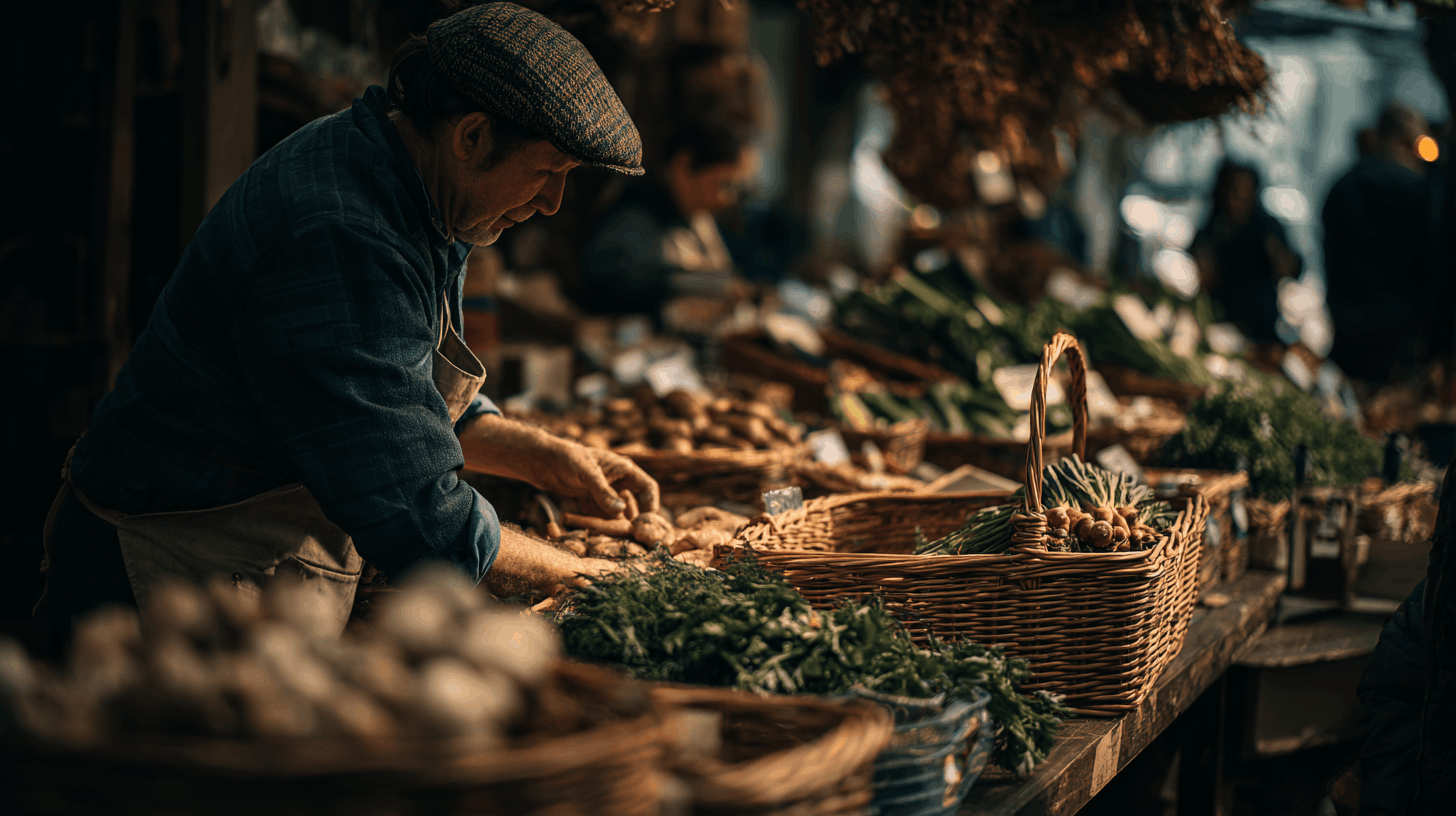
When you choose a local apple over an imported one, you are participating in a complex web of systems thinking. This module explores how your individual food choices ripple through the environment and the economy. We look at agrobiodiversity, the variety of life found in our farming systems, and how local markets keep rare, resilient plant species alive. We also analyze the economic multiplier effect, showing how keeping money within a local food loop creates jobs and stability.
By the end of these lessons, you will see your local farmer not just as a food provider, but as a key architect of a sustainable future.
Now that you understand the systems behind our food, it is time to build your own practical agency. This module moves from the 'why' to the 'how.' You will learn how to bridge the gap between seasonal abundance and winter scarcity using traditional culinary literacy.
We also tackle the modern marketplace, giving you the critical thinking skills to decode labels and spot greenwashing in the supermarket aisles. By the end, you will have a personal toolkit for eating in a way that aligns with your values and your regional environment.
The UN SDGs are 17 global goals for a fairer, sustainable world by 2030.
Learn moreEating Local Supports Good Health
Mastering seasonal and local food directly enhances well-being by promoting healthier diets. When you choose foods grown locally and in season, they are often fresher, more nutritious, and contain fewer preservatives. This approach supports a healthier lifestyle and contributes to reducing illnesses related to environmental factors and strengthening community resilience against health risks.
Reviews

I found the course excellent. It offers very good information, especially for those who care about and value good nutrition, food quality, and respect for local culture. Understanding the relationship between product quality and support for local production is important

I really enjoyed this course because it made me think about food in a way I had never really considered before. I used to think that eating local and seasonal was mainly about getting fresher and better-tasting food. Now I realize that it is connected to so many other things, such as climate, biodiversity, local economies, and food security. One thing that really surprised me was that local food is not always the most sustainable option. The example of tomatoes grown in heated greenhouses made me realize that there are often more factors to consider than just how far the food has travelled. I was also fascinated by the idea that buying unusual or traditional varieties can actually help protect biodiversity and keep important genetic traits alive for the future. I especially liked the idea that something as simple as where I spend my food money can make a difference to my local community. Supporting farmers and small local businesses means that more money stays within the community and continues to circulate. After this course, I think I will pay much more attention to where my food comes from, whether it is actually in season, and how it was produced. It made me realize that even everyday choices, like what I put in my shopping basket, can have a much bigger impact than I previously thought.
Frequently Asked Questions
We are the leading online sustainability education platform. Our mission is to make sustainability knowledge accessible to everyone, by making it engaging to learn and genuinely rewarding to finish. People change what they do once they understand the world around them and the difference they can actually make.
It is genuinely free. You never pay to sign up, to take a course, or to receive your reward, and we never ask for a payment method. The rewards are funded by VeBetterDAO, an organisation distributing rewards to approved sustainability apps every week.
About 14 min of lessons, 6 lessons in total, plus a short exam at the end. There is no deadline and no fixed schedule: your progress saves automatically as you finish each lesson, so you can stop halfway through a module and continue later on any device. Access does not expire.
Yes, and you can check it yourself. Lessons are built on published evidence, peer-reviewed research, UN and government agency data, and public datasets. Factual claims carry numbered citations you can click through to the original source. Read our editorial policy for how we handle contested evidence and sponsored content.
With an email address, or with your Google, X or Microsoft account. Creating an account takes under a minute and puts you straight into the first lesson.