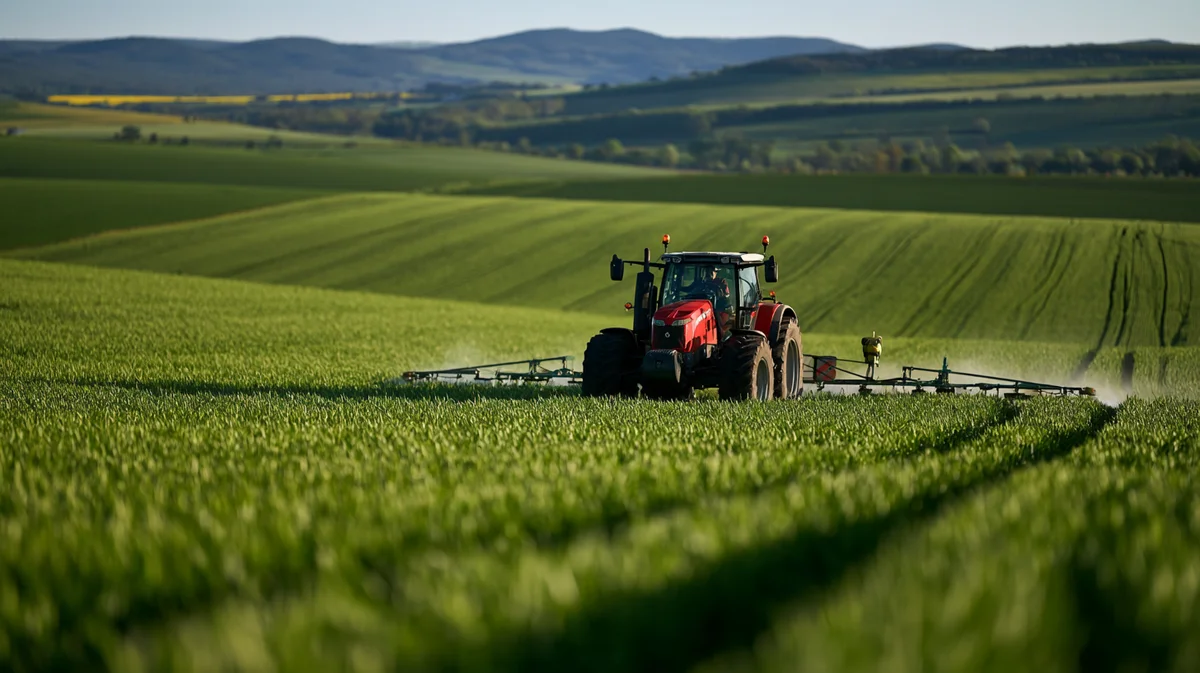
How soil acidification degrades biodiversity
Examine the long-term degradation of the very farmland synthetic fertilizers are meant to enrich, focusing on microbiome loss.
Farmers add fertilizer to make plants thrive, working under the reasonable assumption that adding nutrients improves the soil. A field properly managed should, in theory, remain fertile indefinitely.
But over the decades, fields heavily reliant on synthetic inputs often see their natural productivity stall. Despite receiving massive chemical boosts every season, the soil itself seems to become harder, less forgiving, and less alive.
Does using chemical fertilizers damage the soil itself over time?
The chemical shift in the soil
Adding synthetic ammonia to a field is not like adding natural compost. It is a highly concentrated chemical intervention. When ammonia-based fertilizers interact with moisture in the ground, they undergo chemical reactions that release hydrogen ions.
In basic chemistry, an increase in hydrogen ions means a decrease in pH. Slowly but surely, repeated applications cause soil acidification (FAO, 2021). The soil environment gradually becomes more acidic, fundamentally altering the conditions for anything living beneath the surface.
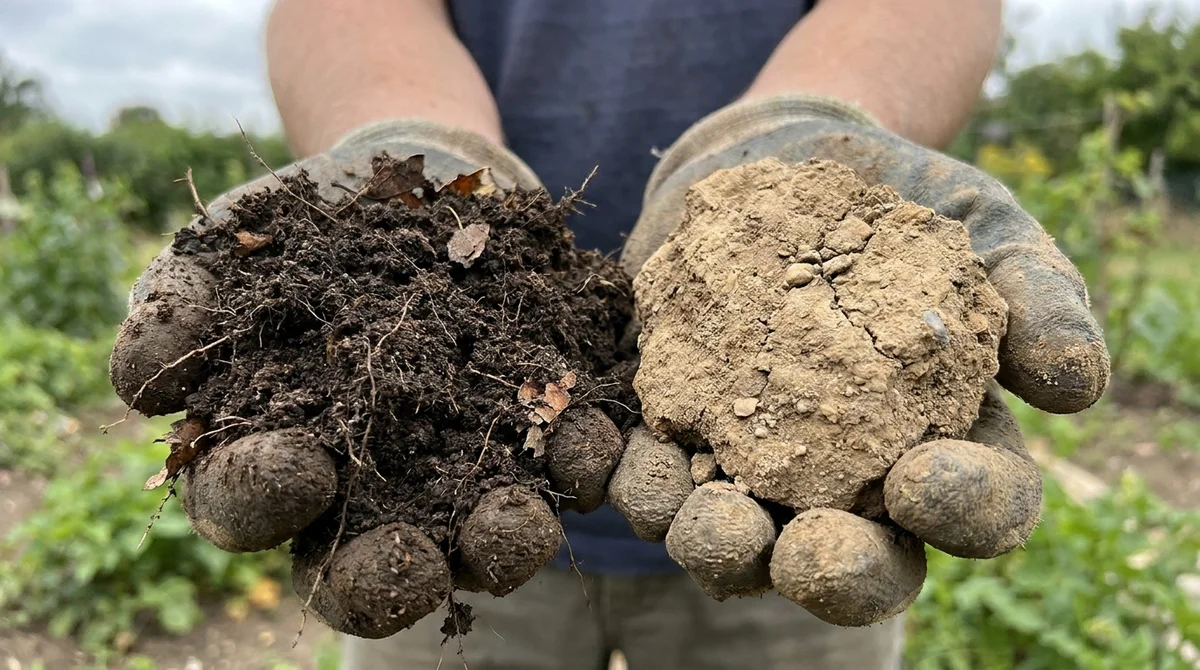
This shifting pH is devastating for the soil microbiome, the vast invisible network of beneficial bacteria and fungi that naturally process organic matter. Just as a highly acidic ocean bleaches coral reefs, highly acidic soil kills off the natural microscopic life that gives dirt its structure and fertility.
The cycle of dependency
When the soil microbiome is robust, bacteria and fungi constantly break down dead plant matter, naturally recycling nutrients back to the crop roots. They act as the farm's internal fertilizer factory.
When acidification wipes out those microbes, that natural recycling system breaks down. The crops can no longer extract what they need from the dead soil. To maintain the same crop yield, the farmer has no choice but to apply even more synthetic fertilizer the next year.
This creates a cycle of synthetic dependency (Science, 2015). The fertilizer degrades the natural soil health, making the farm entirely reliant on heavier doses of the exact chemical that caused the degradation in the first place.
When a farm's natural recycling system breaks down due to lost microbes, how do operators typically compensate to maintain crop yields?
A
By introducing opportunistic native plants that grow faster.
B
By relying on the remaining bacteria to process organic matter faster.
C
By applying heavier doses of synthetic inputs.
D
By letting the soil rest until the pH naturally neutralizes.
Correct
Because the soil microbiome has been destroyed, the farm loses its natural fertilizer factory. The only way to maintain the same crop yield is to apply more synthetic fertilizer, deepening the dependency.
The threat to native flora
The biological damage is not confined to the planted crop rows. When excess synthetic nitrogen drifts into surrounding uncultivated land, it acts as an aggressive disruptor.
Native plants and wildflowers have evolved over millennia to survive in regional soils with specific nutrient limits. They do not know how to handle a sudden flood of synthetic nitrogen. Invasive weeds, however, are opportunistic and fast-growing.
When nitrogen escapes the farm, it provides a massive growth advantage to aggressive weeds. These invasive species quickly outgrow, overshadow, and choke out native flora. The result is a sharp decline in local plant biodiversity at the edges of agricultural zones, leaving heavily compromised landscapes behind.
Excess synthetic nitrogen drifts into surrounding uncultivated land.
The soil microbiome in the uncultivated land breaks down the excess nitrogen before it reaches the plants.
Native wildflowers rapidly evolve to consume the synthetic nitrogen, starving out other species.
Opportunistic invasive weeds gain a massive growth advantage and choke out native flora.
Local plant biodiversity at the edges of agricultural zones sharply declines.
Correct
Native plants evolved for specific nutrient limits, so they cannot handle the sudden nitrogen flood. Invasive weeds exploit this excess nitrogen to rapidly outgrow and destroy native biodiversity.
What to take away
You now see how synthetic inputs can degrade the very foundation of agriculture.
- Ammonia-based fertilizers release hydrogen ions, steadily lowering the soil pH.
- This soil acidification kills the beneficial microbiome that naturally recycles nutrients.
- Farmers become trapped in a cycle of dependency, requiring ever more synthetic inputs to replace lost natural fertility.
- Escaping nitrogen also harms adjacent wild lands by giving aggressive invasive weeds an artificial advantage over native plants.
The crisis extends beyond water and air; the long-term viability of the earth itself is at stake.